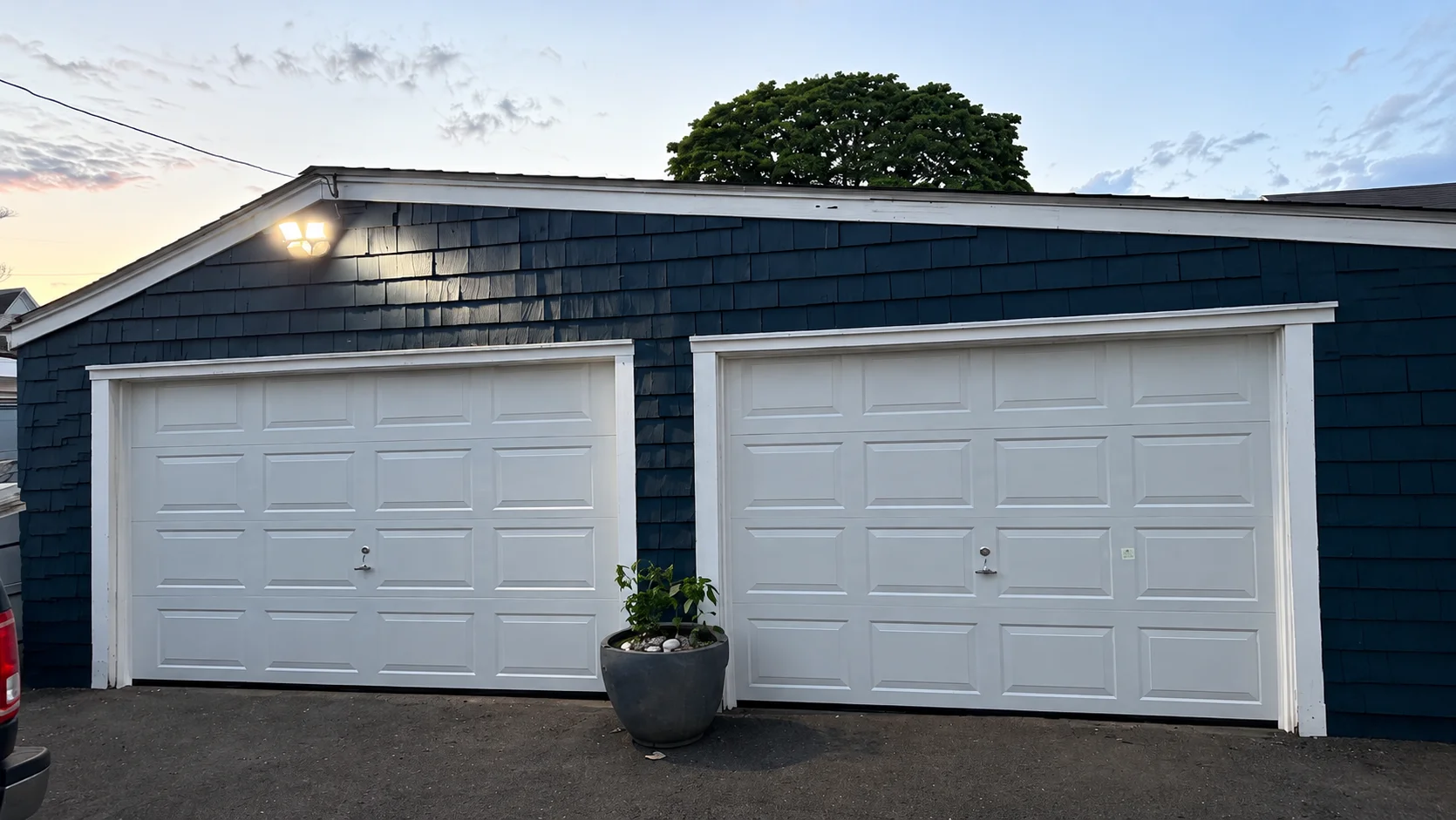
Insulated garage doors can significantly reduce energy costs by minimizing heat transfer, making your home more efficient. Studies indicate that insulated garage doors can save homeowners between 10% to 20% on their energy bills, particularly in climates like Santa Cruz, where temperature fluctuations can impact indoor comfort.
An insulated garage door changes three things you notice right away: temperature control, noise, and how the door behaves when it moves. First, temperature. A garage door is a thin, very large panel between indoor and outdoor air. Without insulation, it conducts heat quickly. Insulation adds resistance to that heat flow, so your garage loses less warmth on cool days and gains less heat on warm ones. When the garage shares a wall or ceiling with living space or acts as a buffer between the driveway and the kitchen or a stairwell, slowing that heat transfer can make the adjacent rooms feel more consistent with less HVAC cycling.
Noise is the next improvement. Insulated sections are essentially a sandwich: metal skins bonded around a core. That construction dampens vibration. Open and close the two types side by side, and you hear the difference. The insulated panel tends to produce less of the tinny resonance you get from a hollow door, which helps if there is a bedroom, nursery, or office within earshot of the opening. The same sandwich construction that holds insulation also makes the sections stiffer. Stiffer sections resist flexing, so the door usually tracks straighter with fewer rattles. That is not a guarantee of smoother operation, since track alignment, rollers, and springs still matter, but the panel itself contributes less movement that can shake other parts.
It helps to separate myths from mechanics. The insulation does two jobs: it slows conductive heat flow through the panel and, because the panel is bonded together, it reduces panel flex. It does not heat the garage and does not seal air gaps on its own. That sealing comes from bottom, top, and side weather seals that press against the jambs and header when the door is closed. If you want the temperature benefit from an insulated door, make sure the perimeter seals are in good condition and the bottom seal actually contacts the floor. A tiny daylight gap under a new insulated door will still leak air.
The door’s weight and balance are another behind-the-scenes factor. Insulated models can weigh more than basic single-skin steel doors. This is not an issue when the springs are correctly sized and tensioned for the door’s weight. However, it is one reason to let a professional handle spring work and balance checks. Do not touch springs, cables, brackets, or an off-track door. Openers and force settings are related. A modern opener should not struggle with a correctly balanced insulated door. An insulated upgrade is a good moment to confirm the opener’s rail, brackets, and safety features are all set up correctly for the new load.
Most homeowners start here: insulated versus non-insulated garage door options have different upfront prices. The premium for insulation varies by door size, panel style, color, finish, and the R-value you pick. Windows, glass types, and decorative treatments add or subtract from that baseline. Over time, the cost that matters is how the door has performed in your home: what it has done for your comfort, how much noise it has kept out, and whether you have had to think about it at all.
A practical way to compare is by use, not just by climate. If your garage encloses laundry, a gym, a workshop bench, or bike storage that you access daily, you are in the garage enough to feel temperature swings and hear the door. Insulation pays you back in comfort and quieter operation every time you roll the door. If your garage is detached, used for storage a few times a month, and shares no walls with living areas, a non-insulated model can be a rational choice.
Heat moves from warmer to cooler surfaces as long as there is a difference in temperature. You do not need extreme heat or cold for that to add up. The garage door is the largest movable surface in most houses. Even a modest temperature difference across a large, uninsulated panel moves a lot of heat. An insulated door reduces that transfer. This same logic applies to cooling. Keeping the garage from absorbing as much heat through the door on warm afternoons reduces how much that heat radiates into adjacent rooms later. If the garage contains a second refrigerator, workout gear, or anything else you use regularly, you feel the difference in how usable the space stays. You may not be actively heating or cooling the garage, but the space still affects the rooms you care about. Sealing details multiply the gains from insulation.
Many homeowners come to insulation for energy reasons and end up valuing the quiet just as much. The damping effect of a bonded, insulated section reduces the metallic echo that can travel into living space. This is useful if your routine involves early departures, late returns, or nap schedules. It is also worth noting how stiffness changes the moving feel. That matters during high-use periods like mornings when everyone is in and out. It does not replace the need for periodic service. Trained technicians can correct track, roller, and balance issues safely.
If you prefer a clear decision rule over research rabbit holes, consider these questions to pick a door with confidence: Does the garage share a wall, ceiling, or doorway with a living space you use daily? Do you run laundry, a workshop, home gym, or storage you access every day in the garage? Is there a bedroom or office above or beside the garage that hears or feels door movement? Do you open and close the garage multiple times a day, especially early or late? Will you install windows or a darker finish that could raise surface temperature in the sun? Is the existing door loud, tinny, or prone to flex that you want to eliminate? If you answered yes to two or more, an insulated model is the safer bet for comfort and noise. If you answered no across the board and your garage is detached, a non-insulated door can meet the need.
A smooth installation starts with fit and ends with balance. Measurements should account for the full opening, headroom, and the condition of the jambs. New sections should sit square in the opening, and the hardware set should match the door’s weight and use. If you are upgrading from a basic steel door to a higher R-value insulated model, confirm that your opener is mounted solidly to the structure and that fasteners at the header bracket and hanging straps are appropriate for the load. Weather seals deserve specific attention. If your driveway or slab is uneven, discuss options for a bottom retainer that accepts a larger gasket to close the gap. Seals are often where big comfort gains are won or lost.
For related details, review What We Do Garage Doors Recommends This Season and Salt Air and Your Garage Door: Preventing Rust in Santa Cruz Coastal Homes.
If a repair issue is what brought you to this decision point, same-day help is available. WeDo GarageDoor provides same-day residential garage door repair across the South Bay and Santa Cruz County with staffed shops in Santa Clara and Capitola for fast response. When you are ready to replace instead of repair, we also handle residential door installation so you can complete the upgrade without juggling multiple vendors. A final note on local fit: homeowners sometimes search for “insulated garage doors vs non-insulated” and then try to map national advice to their own home. Skip the one-size-fits-all mindset. The right choice is the one that fits how you actually use your garage and how the opening connects to your living space. Get the panel construction, perimeter sealing, and balance right, and the rest of the system will feel effortless for years.