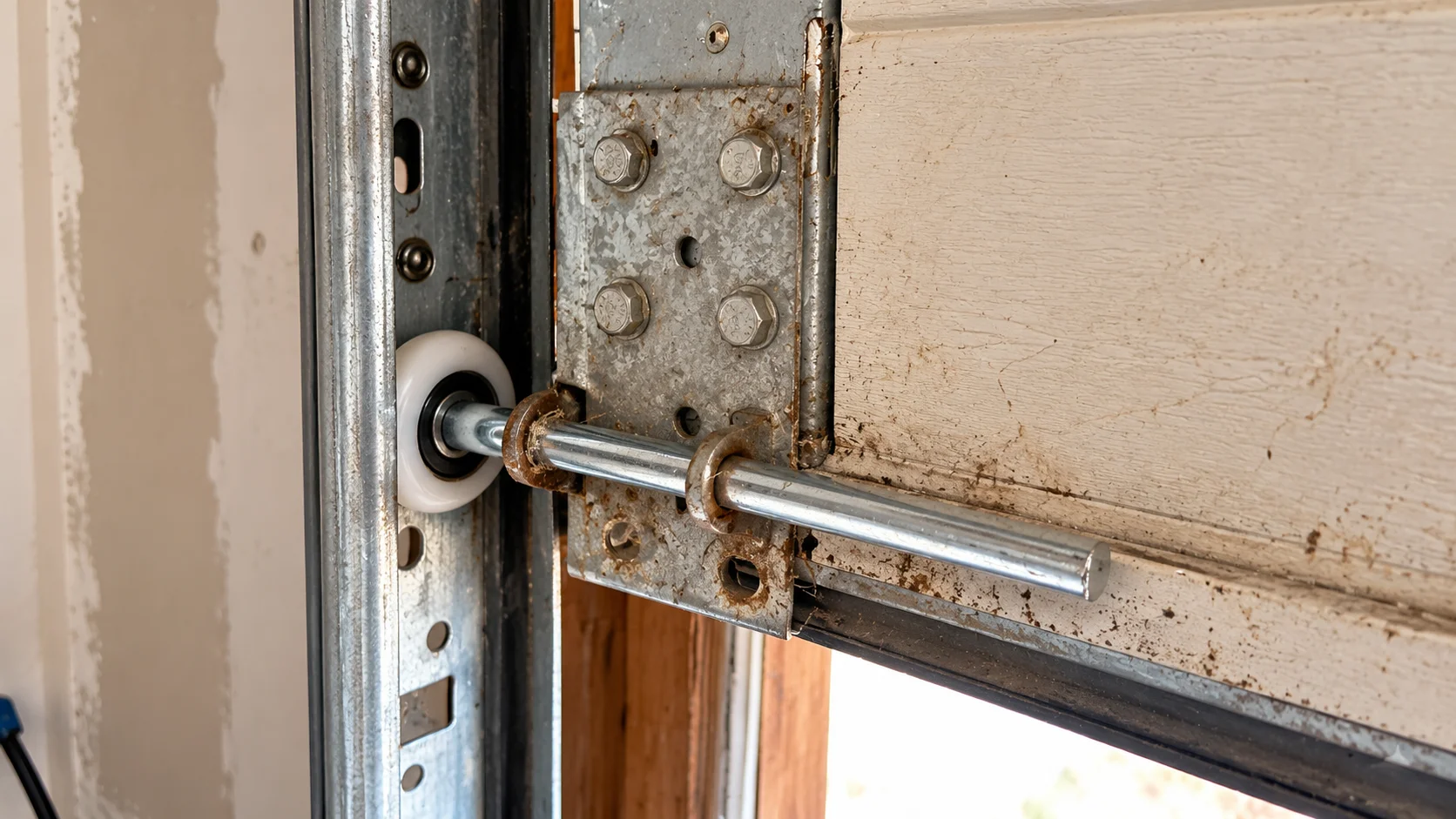
Live a few blocks from the water in Santa Cruz and you see rust on everything metal: patio furniture, bike chains, the hinges on the car. Garage doors get the same treatment, and because a garage door is a set of springs, cables, and bearings working under tension, rust does more than look bad. It makes the door heavier to move, harder on the opener, and more likely to fail at a bad time.
This guide covers why coastal air is hard on garage doors, which parts go first, a maintenance routine you can do yourself, and how to tell when rust has turned into a repair.
Why coastal air is hard on garage doors
Salt carried in fog and onshore wind settles on metal parts and holds moisture against them. On a typical Santa Cruz day, morning fog wets the hardware, the afternoon dries it, and the next morning wets it again. That wet-dry cycle is what speeds corrosion, and it is why homes in Seabright, Pleasure Point, the Westside, and along East Cliff often see rust sooner than homes a few miles inland.
Garages that face the ocean, sit open while you work, or have a gap under a worn bottom seal take the most of it. Sand blown in from the street adds grit that wears coatings off moving parts.
The parts that rust first
- Springs. Torsion and extension springs are coated, but the coating wears with every cycle. Rust on the coils adds friction, and pitting gives a crack a place to start. A rusty spring is more likely to snap, and it often does so on a cold, damp morning.
- Lift cables and drums. Cables run down to the bottom corners of the door, close to the floor where moisture collects. Look for broken strands or a rusty, rough patch near the bottom bracket.
- Rollers and hinges. Steel rollers with open bearings tend to seize and squeal. Hinges rust at the pins and start to bind, which makes the door noisy and puts more load on the opener.
- Bottom brackets and fasteners. The bottom brackets sit at the floor where water and sand collect, and they hold the cables under tension. If they look badly corroded, do not loosen them yourself. Call a technician.
- The bottom seal and retainer. Vinyl seals stiffen and crack, and aluminum retainers corrode. A gap under the door lets in more salt air, sand, and water.
- Opener safety sensors. The sensors mount a few inches above the floor. Corroded terminals or a fogged lens can make the door reverse for no visible reason.
A simple maintenance routine for coastal garages
- Wipe the door down every few months. Use fresh water and a soft cloth on the outside of the door and the tracks, especially after a stretch of foggy or windy weather. Do not spray water into the opener.
- Lubricate the moving parts. A garage-door lubricant (a silicone or white lithium spray) on the hinges, roller bearings, and spring coils a few times a year keeps moisture off the steel. Do not grease the inside of the tracks. Grease collects sand and makes the rollers drag.
- Look at the springs. Orange rust, flaking, or a visible gap in a coil means it is time for a closer look.
- Check the balance. With the door closed, pull the red release cord and lift the door by hand to about halfway. A balanced door stays put. If it drops or pulls upward, the springs are worn or out of adjustment. Leave the adjustment to a technician, because spring tension can cause serious injury.
- Keep the threshold clean. Sweep sand and leaves away from the bottom seal so they do not hold moisture against the door and the brackets.
- Clean the sensor lenses. A soft, dry cloth is enough. If the sensor lights blink, check that nothing is blocking them and that they still point at each other.
When rust means a repair
Light surface rust is common near the coast and does not mean anything has to be replaced. What matters is whether the rust has weakened a part that carries load. Call for service when you see:
- Pitting or a gap in a spring coil.
- Frayed or broken strands on a lift cable.
- Rollers that no longer turn, or hinges that crack or bind.
- A door that feels heavy, opens unevenly, or no longer stays halfway open.
Springs are replaced as a matched pair, sized to the door's weight. If you are in Santa Cruz, our Santa Cruz spring repair page explains what the visit includes.
When rust means a new door
A door is usually worth repairing when the sections are straight and solid. Replacement makes sense when rust has eaten through the bottom section, panels have cracked or separated, or the same hardware keeps failing. If you are weighing the two, see what to look for in a new garage door for a Santa Cruz home.
Upgrades that hold up better near the water
- Galvanized or stainless hardware. Hinges, brackets, and fasteners with a better coating last longer in salt air.
- Nylon rollers with sealed bearings. They are quieter and do not rust the way open steel bearings do.
- Coated springs. Galvanized and coated torsion springs resist surface rust better than plain oil-tempered springs.
- A new bottom seal. It is one of the cheapest upgrades and keeps sand, water, and salt air out of the garage.
Get the door checked
WeDo GarageDoor serves Santa Cruz County from our Capitola shop at 1500 41st Ave, Capitola, CA 95010. Call (831) 282-8312 for garage door repair in Santa Cruz, Soquel, Aptos, Scotts Valley, Watsonville, and Ben Lomond. We inspect the door, explain what the rust has actually affected, and quote before any work starts.