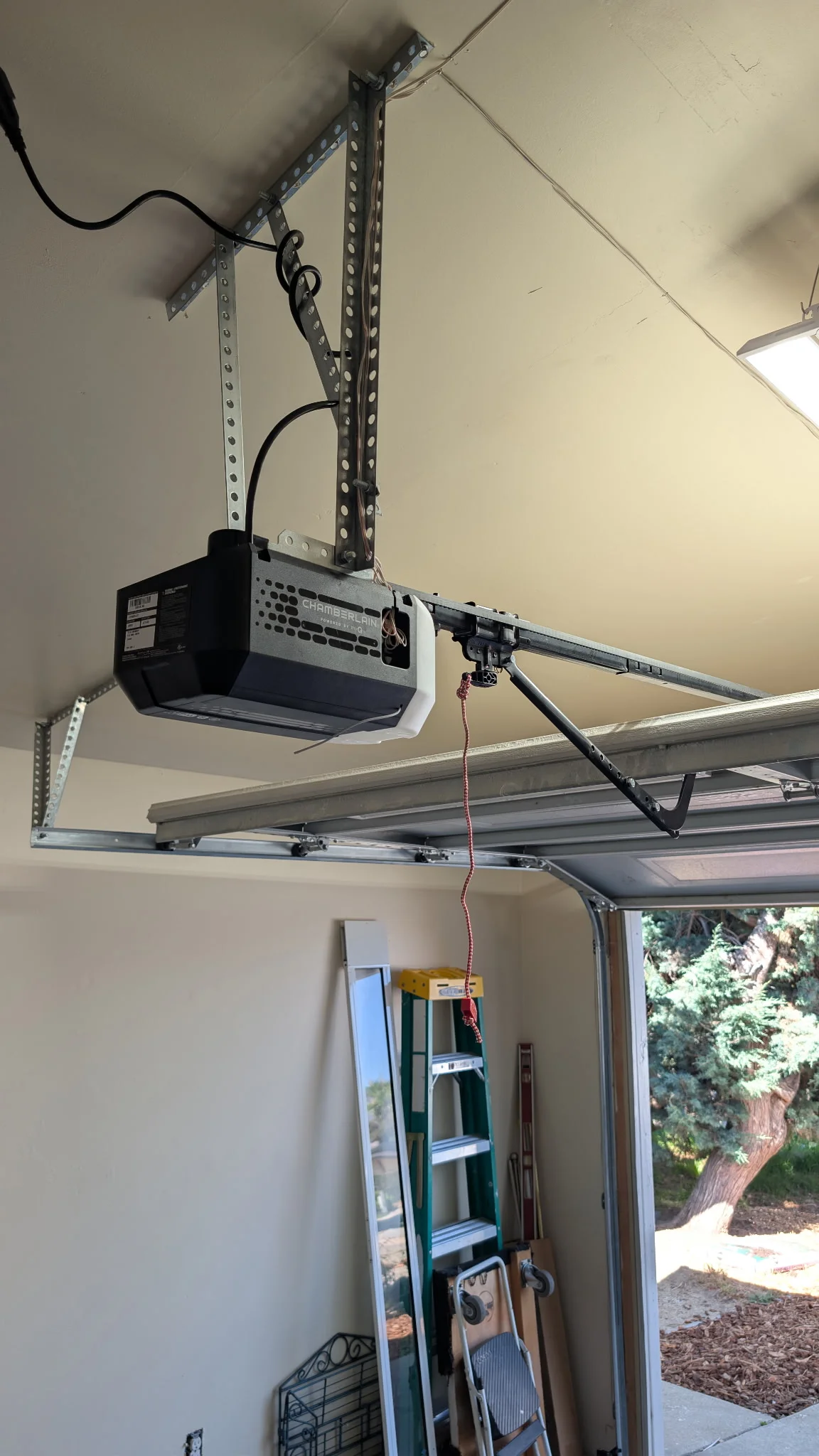
The opener operates the door. This guide tackles the differences between garage doors and openers in Santa Clara with a myth-busting lens so you can make informed decisions, spend wisely, and ensure safety.
The Door is the Barrier: Choose Construction First, Then Looks
Start with the door itself. It is the physical barrier that must stay aligned, roll smoothly, and resist flexing. A basic steel door uses a thin skin over rails and stiles. Step-up models add thicker skins, better internal bracing, and insulation. Wood doors offer a distinct, warm look and can be repaired in sections, but they are heavier and require maintenance. If you prefer the wood aesthetic without the upkeep or weight, composite overlays on a steel base provide a good compromise. None of these materials is categorically “best.” The right choice is the one that remains rigid under daily use and suits your maintenance preferences.
Insulation affects not just temperature but also stiffness and sound. If you are weighing that trade-off, our breakdown on Insulated vs Non-Insulated Garage Doors explains what changes day to day and what does not, including how insulation interacts with springs and the operator. A common myth to dispel is that a stronger opener can compensate for a cheaper door. The opener is not a winch for a flimsy gate; treating the motor as a substitute for sound door mechanics can shorten the life of the entire system. Additionally, the weight and balance of the door significantly impact the opener's performance. A heavier door requires a more powerful opener to operate effectively, as insufficient power can lead to strain on the opener and premature failure.
The Opener is the Mover: Match Drive Type, Features, and Power to the Door
Once the door is right, select the operator that fits. Drive type sets the tone for daily use. Chain-drive openers are typically the lowest-cost option and have a robust, mechanical feel. They tend to be noisier, which can be a concern if a bedroom is located above the garage, but they often run for a long time with basic service. Belt-drive openers cost more, run quieter with less vibration, and are a common choice when the garage sits under living space. In general-use comparisons, chain-drive units often outlast belt-drive by a year or two, while belt drives provide quieter operation and smoother starts and stops. If quiet mornings are invaluable in your household, the belt drive will earn its keep.
Smart features are now standard for many families. Connectivity allows you to check status, receive alerts, and share access without leaving a keypad code under the mat. When comparing “smart” to “basic,” focus on functions that reduce nuisance trips and missed deliveries. Additionally, consider how the app behaves during network interruptions. Horsepower is a sizing decision rather than a bragging right. Standard residential doors generally pair well with 0.5 HP operators, while heavier or tall doors, especially those with decorative overlays or solid wood, usually require 0.75 HP or 1 HP. The right operator, set up on a healthy, balanced door, starts gently, moves consistently, and stops without a slam.
What Actually Drives the Cost for Doors and Openers
Budgets matter, but price lists rarely tell the full story. For doors, core cost drivers include panel construction, insulation type, window designs, finish warranties, hardware quality, and the size of the opening. Hardware upgrades like long-life rollers can also change daily noise and maintenance. For openers, drive type, horsepower, and smart features influence the unit cost. Installation complexity is the second half of the bill. This is normal and worth doing right to ensure the system is quiet and predictable.
One area where you can save without regret is by avoiding features you will not use. If you do not want app control, you might not need a premium smart hub. If the garage is detached and noise is not a concern, a chain-drive unit can serve you well for years. If you like to compare replacement scenarios side by side, our guide to New Garage Door Cost in 2026 unpacks what the money buys at each level, allowing you to plan with clarity. Remember the cost rule of thumb confirmed by real-world jobs: opener pricing varies based on the type of opener and the complexity of the installation. A straightforward swap is one thing; that is not upselling but rather ensuring the door and operator work together as designed.
When to Buy and What “Market Trends” Mean for a Homeowner
People often ask about the “best time” to buy a door or an opener in Santa Clara. The most useful answer focuses on your needs rather than the calendar. Replace the door when it can no longer secure the opening or when its structure is compromised. Replace the opener when key safety features are missing or the unit cannot be repaired with available parts. These are need-based decisions, not seasonal ones.
If you are timing a discretionary upgrade, consider these questions: Are you already planning exterior work that affects the opening, like stucco or trim? Coordinate to avoid rework. Do you want features that are easier to implement during a replacement, such as windows, higher R-value insulation, or a low-clearance track kit? Will a quieter operator change how you use the space, for example, a belt drive under a nursery? Seasonal sales can exist, and supply conditions change, but those shifts are not consistent enough to rely on. The reliable value plays are simple: get at least two like-for-like quotes that detail the door construction, insulation, hardware, and opener model; confirm that the provider will set the springs and the operator to work as a system; and inquire about what happens if parts are delayed. In our region, what matters more than chasing a theoretical sale is finding a team that can respond quickly and stand behind a clean, safe installation.
Keep the System Healthy Without Risky DIY
You can observe symptoms safely without touching springs, cables, brackets, or an off-track door. However, there is much you can do from a safe distance to prevent small issues from becoming significant ones. Watch the door travel; it should roll smoothly, stay centered in the tracks, and close without visible gaps along the bottom. Listen for changes in sound. Check that the opener starts cleanly, moves at a steady pace, and stops without a bounce. Our team will separate door faults from operator faults, ensuring you pay to fix the right issue the first time.
Smart homeowners also monitor safety basics. Confirm that your wall control is mounted out of children’s reach and do not bypass them. Modern operators monitor force and travel to reduce risk. Finally, remember how the pieces fit together. The opener is not a forklift, and the door is not a passive curtain. They are a matched pair, which saves time on the phone and helps the technician arrive prepared.
If you are dealing with a stuck door or deciding between repair and replacement, start with the right diagnosis and a practical plan. Explore our full range of garage door services when you are ready to schedule same-day help in Santa Clara or Santa Cruz County.