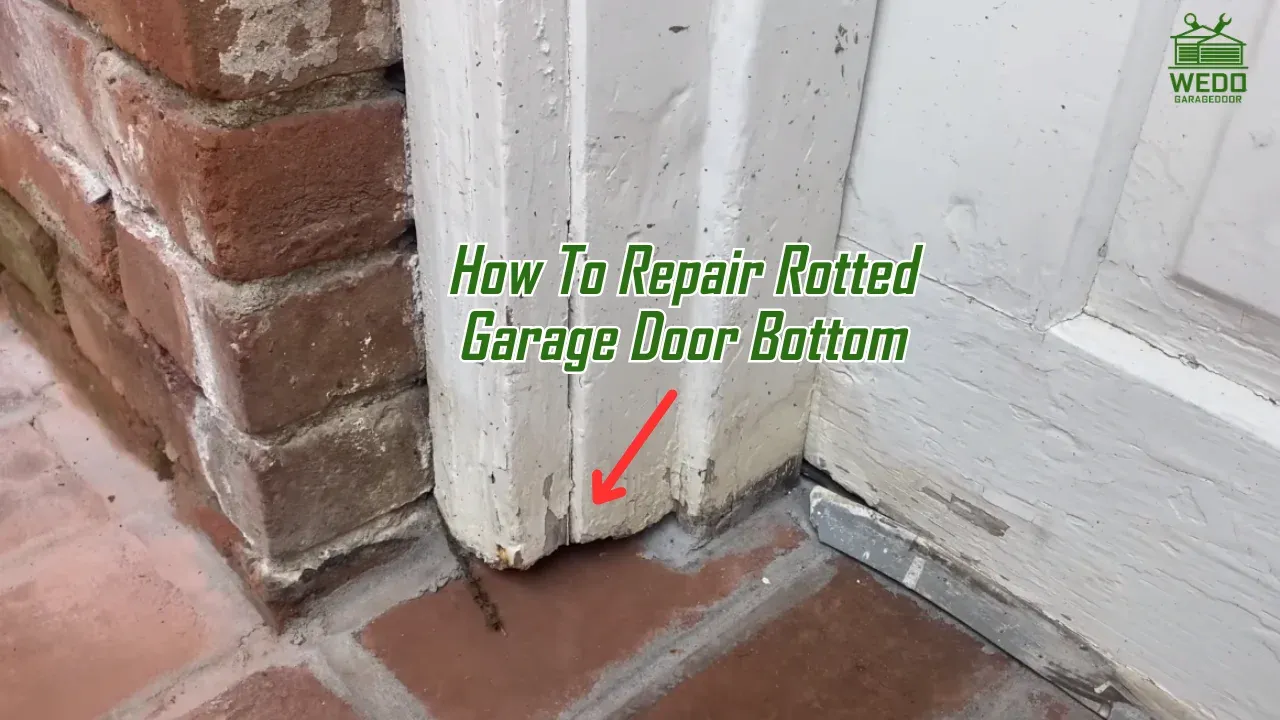
The bottom of a garage door takes more abuse than any other part of it. It sits closest to standing water, driveway runoff, sprinkler spray, and in some areas road salt carried in on tires. Wood doors soften and crumble, steel doors rust from the inside of the bottom rail, and the bottom seal eventually flattens or tears. Catching the damage early usually means a smaller repair.
Signs of Bottom-Section Damage
- Soft, swollen, or crumbling wood at the bottom rail
- Peeling skin or rust on a steel section near the floor
- A flattened, torn, or missing bottom seal
- Daylight under the door or water entering the garage
- Paint that keeps blistering along the lowest few inches of the door
- A door that no longer sits flat on the floor when it closes
What Causes the Bottom to Rot or Rust
Most bottom damage starts with water that never gets a chance to dry. A worn seal lets rain run under the door and sit against the bottom edge. A driveway that slopes toward the garage sends runoff to the same place. On wood doors, unsealed end grain along the bottom edge soaks up moisture like a sponge. On steel doors, scratches in the factory finish let rust start inside the bottom rail, where it is hard to see until the skin bubbles.
Why the Bottom Section Matters
The bottom section carries the seal, helps square the door to the floor, and is attached to the lift hardware. The bottom brackets on each side hold the lift cables, and those cables are under spring tension even when the door is closed. Cutting, splicing, or rebuilding the bottom section without checking cable fixtures and door balance can leave the door unsafe.
What You Can Safely Check Yourself
- Close the door and look for daylight or gaps along the floor.
- Press gently on the bottom rail of a wood door. Wood that gives or flakes is rotted, not just stained.
- Look at the inside face of a steel bottom section for rust, swelling, or separated skin.
- Check whether the bottom seal is still seated in its retainer along the full width of the door.
- Look at the bottom brackets and cables from a distance. Rust, fraying, or a loose bracket means the door should be inspected before anyone works on the bottom.
Do not remove or loosen the bottom brackets yourself. If a cable looks frayed or a corner of the door has dropped, stop using the door and see our garage door cable repair page.
Repair or Replace
Limited seal replacement may be enough when the section remains structurally sound. A rotted, delaminated, or impact-damaged bottom section often needs section replacement. If matching parts are unavailable or several sections are failing, a complete door may be the more reliable option.
A few things decide which way it goes:
- How far the damage reaches. Surface decay on the face of a wood door is different from rot that has reached the bottom rail or the area around the brackets.
- Whether a matching section exists. Many steel door models can still be matched section by section. Older or discontinued designs often cannot.
- The condition of the rest of the door. If the upper sections, hinges, and rollers are also worn, replacing one section only fixes part of the problem.
See garage door installation or the repair hub if you are not sure which path applies. Our new garage door cost guide explains what drives the price of a replacement.
Preventing Future Damage
- Replace a bottom seal as soon as it flattens, cracks, or pulls out of its retainer.
- Add a threshold seal if water runs into the garage from a sloped or uneven floor.
- Keep paint or stain intact on wood doors, including the bottom edge where water collects.
- Rinse salt and mud off the bottom of the door and keep sprinklers aimed away from it.
- Inspect the bottom of the door every fall, before the rainy season starts.
Our guide to weather-sealing a garage door covers the seals that keep water off the bottom section.
Get the Bottom Section Inspected
WeDo GarageDoor checks the bottom section together with the cables, brackets, and balance, then explains whether a seal, a section, or a new door makes sense before any work begins. Call Santa Clara at (408) 290-5673 or Capitola at (831) 282-8312.