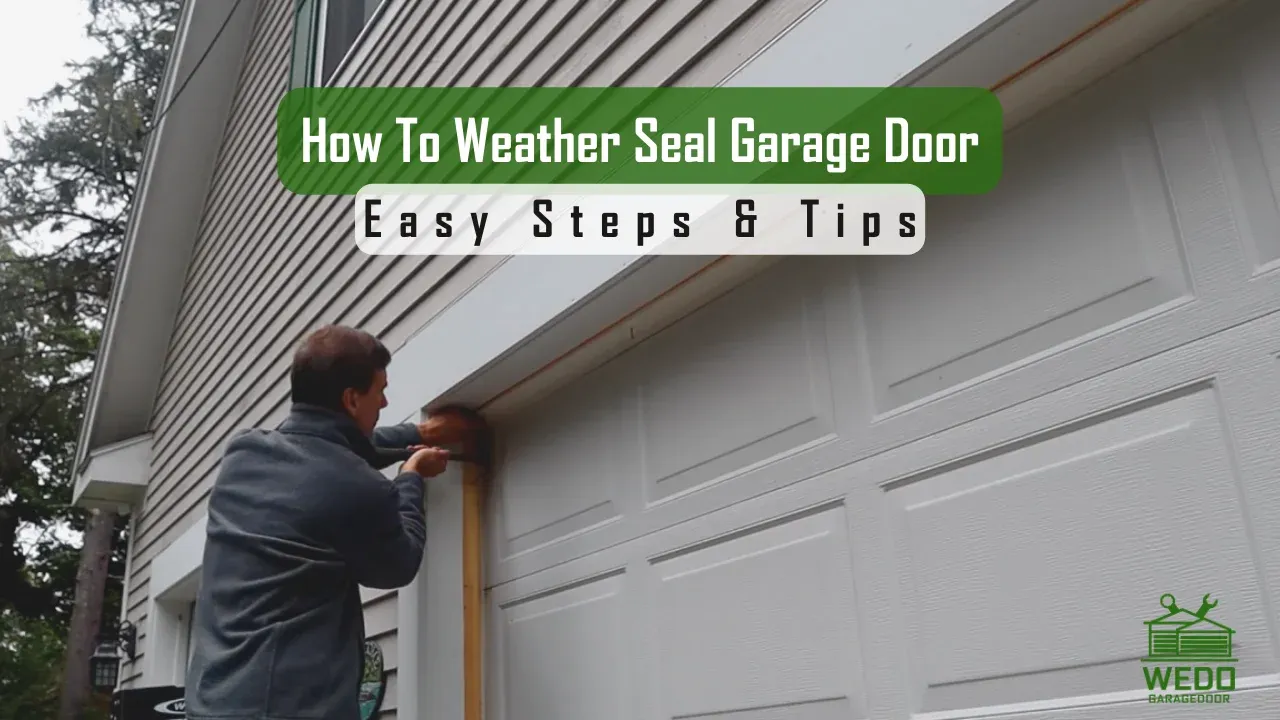
A garage door that seals well keeps rain, wind, dust, leaves, and pests out of the garage. If the garage is attached to the house, it also helps the rooms next to it stay more comfortable. Most sealing problems come from a worn bottom seal, weatherstripping that has pulled away from the frame, or a floor that leaves a gap the seal cannot close.
Seals That Affect a Garage Door
- Bottom seal or astragal along the floor
- Side and top weatherstripping around the opening
- Threshold seals where the floor is uneven
- Section joints and window gaskets on some doors
The right seal depends on the door construction, floor condition, and how the door travels. A seal that is too tall, too stiff, or poorly aligned can cause the door to reverse or bind.
For a closer look at seal profiles and materials, see our guide to types of garage door seals.
Safe Inspection
With the door closed, look for daylight around the perimeter and check whether the bottom seal is cracked, flattened, or missing sections. Do not loosen cables, springs, or bottom fixtures to change a seal.
A few more checks help pinpoint the problem:
- After rain, look for water lines or puddles just inside the door.
- On a windy day, feel for drafts along the sides and top of the opening.
- Look for leaves, dirt, or insect trails collecting at the corners of the door.
- Check whether the side weatherstripping touches the door evenly from top to bottom.
Choosing a Replacement Bottom Seal
Many steel doors hold the bottom seal in an aluminum retainer with two channels, and the seal slides into those channels. Wood doors and some older doors use a seal that is nailed or screwed directly to the bottom edge. Before buying a replacement, note which type you have, measure the door's width, and check the width of the retainer channels so the new seal fits snugly. A seal that is the wrong shape for the retainer will slip out or bunch up.
If the retainer itself is bent, corroded, or pulling away from the door, replacing only the rubber will not last. The retainer may need to be replaced too.
Side and Top Weatherstripping
The weatherstripping on the jambs and header should rest lightly against the face of the closed door. If it is pressed too hard against the door, it can drag as the door moves and make the opener work harder. If it is too far away, it leaves a gap. Cracked, brittle, or warped weatherstripping should be replaced rather than pushed back into place.
Threshold Seals for Uneven Floors
When a concrete floor has settled or slopes toward the garage, the bottom seal may touch the floor in some places and not others. A threshold seal fixed to the floor under the door gives the bottom seal something even to close against and helps keep runoff out. It needs to sit where the door lands without causing the door to reverse when it touches the floor.
When Sealing Is Not Enough
A rotted, bent, or delaminated bottom section may need repair or replacement before a new seal will work. If the door is noisy, crooked, or difficult to close, inspect the complete system rather than adding weatherstripping over a mechanical problem.
Related reading: garage door will not close, repairing a rotted garage door bottom, and garage door installation.
Seasonal Sealing Checklist
- Check the bottom seal and side weatherstripping every fall, before the rain starts.
- Clear leaves and debris from the floor where the door closes.
- Test that the door still reverses when it meets an obstruction after any seal change.
- Replace seals that have hardened, cracked, or shrunk rather than waiting for a leak.
Need Help Sealing the Door?
WeDo GarageDoor replaces bottom seals, retainers, and weatherstripping and checks that the door still closes and reverses correctly afterward. Call Santa Clara at (408) 290-5673 or Capitola at (831) 282-8312.