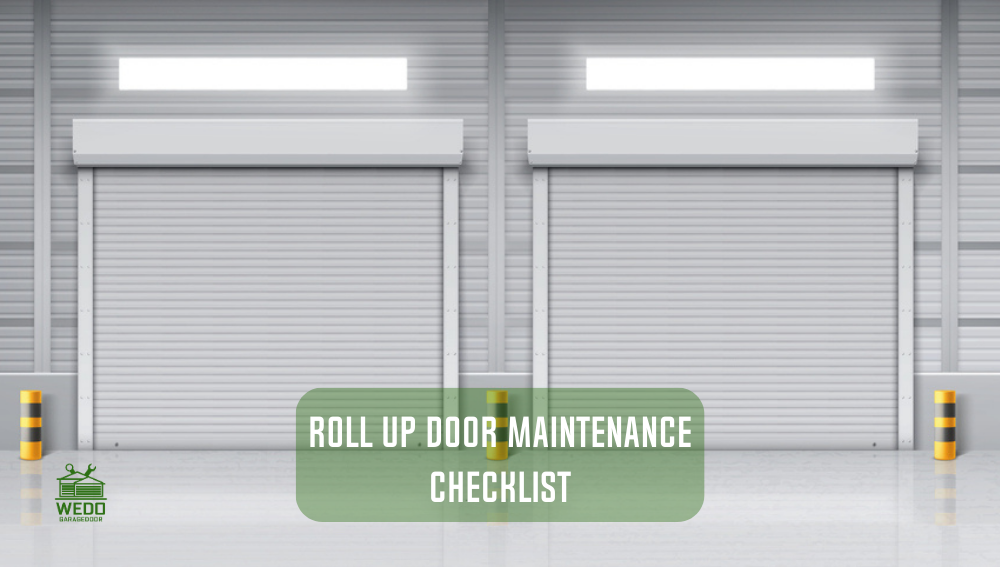
Roll-up garage doors coil a flexible curtain of slats around a barrel above the opening instead of riding on overhead tracks. They are common on carports, sheds, workshops, and storage spaces, and they hold up well when they are kept clean and checked regularly. This checklist covers what an owner can safely inspect and where professional service begins.
What to Inspect
A roll-up door should travel evenly, stay aligned in its guides, and stop without slamming. Regular visual checks can identify wear before a lockout or impact occurs.
- Listen for new grinding, popping, or scraping sounds
- Watch for uneven travel or a curtain that hangs to one side
- Look for damaged slats, loose fasteners, and debris in the guides
- Confirm that safety devices and controls still operate as intended
Monthly Checks
- Run the door through a full cycle. It should open and close smoothly at a steady speed, without jerking or hesitating.
- Look at the guides. Remove leaves, dirt, and debris from the side guides, and look for dents or bends that could catch the curtain.
- Check the bottom bar. It should sit level across the floor when the door is closed, with the seal intact.
- Test locks and latches. They should engage and release without force.
Every Six Months
- Look for loose bolts on the guides and mounting brackets, and have them tightened if they have worked loose.
- Inspect the curtain for cracked, bent, or separated slats and for missing end locks or wind locks.
- Clean the curtain with mild soap and water to remove grit that wears the guides.
- If the door has an electric operator, test the safety sensors or reversing edge and confirm the door stops at the right open and closed positions.
- Follow the manufacturer's instructions on lubrication. Use only the product they specify, and wipe away any excess so it does not collect dirt.
Seasonal Care
Before the rainy season, check that the bottom seal still closes the gap at the floor and that water drains away from the door instead of pooling against it. In dusty or coastal areas, clean the curtain and guides more often, because grit and salt air speed up wear on the slats and hardware. If the door is rarely used, run it through a full cycle every few weeks so you notice a problem before the day you actually need the door.
Do Not Adjust Spring Tension
Roll-up door springs and tension assemblies store substantial energy. Do not unwind, tighten, or replace them. Leave guide realignment, cable work, and tension adjustment to a trained technician.
When Maintenance Becomes Repair
Stop using the door if it binds, leaves the guides, will not stay in position, or requires force to move. Those symptoms belong on the repair hub rather than a maintenance checklist.
Other signs that call for service:
- The curtain drops on its own or creeps open when it should stay closed
- Slats are pulling out of the guides or overlapping unevenly
- The door is noticeably harder to lift by hand than it used to be
- An operator strains, hums, or stops partway through travel
For sectional overhead doors, the related guides on a noisy garage door and garage door roller repair cover similar warning signs.
Keep a Simple Service Log
Write down the date of each check, anything that changed, and any repairs. A short log makes it easier to spot a problem that is getting worse and gives the technician useful history when you call.
Schedule Service
WeDo GarageDoor inspects the door, explains the needed work, and provides a price before repair begins. Call Santa Clara at (408) 290-5673 or Capitola at (831) 282-8312.