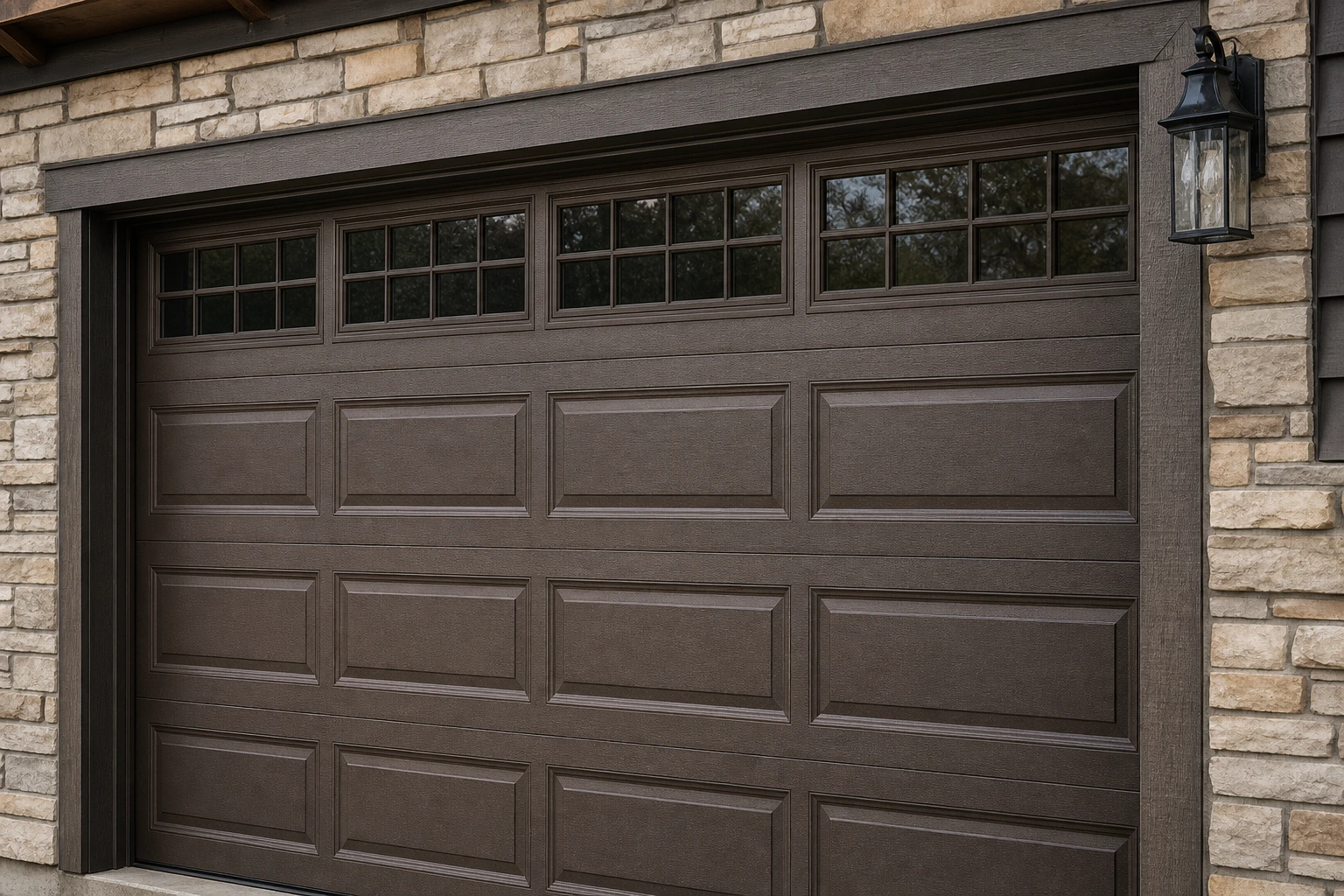
Enhancing your home security starts with a robust garage door system. A reinforced door combined with a reliable opener can significantly reduce one of the easiest entry points into many homes. When these components work together, they create a door that resists prying and closes and locks consistently.
Start with the door. Security begins with sections that do not flex under hand pressure, hinges and struts that keep panels rigid, and tracks anchored into solid framing. This rigidity helps transfer prying and kicking forces into the framing instead of buckling. If you want daylight, choose windows placed high enough to limit visibility into the garage while keeping latches and release mechanisms out of reach.
Next, consider the operator. A dependable opener contributes to security through controlled movement and consistent locking. Look for models that actively monitor travel and force, stopping and reversing when necessary for safety while still closing firmly against the floor. When selecting a new unit, inquire about how its entrapment features meet the federal consumer standard for residential operators. Additionally, secure remote access features such as rolling-code remotes and protected keypad programming can help reduce code grabbing and tampering.
Finally, control the perimeter. A door that cannot seal or latch cleanly undermines even the best operator. Bottom seals, side jamb seals, and a threshold that the door can compress against all help the operator finish its travel and engage its lock consistently. This ensures fewer false reversals and a tighter close, reducing the temptation for someone to exploit gaps.
If your goal is to prioritize security in a new system, review our New Garage Door Installation overview to understand door and hardware choices before you select finishes. For example, a wall-mount operator can save space in areas with limited ceiling height, while a quiet belt-driven ceiling operator may be ideal for typical ceiling heights. Both options can deliver strong security, but the key is how well the unit can monitor motion, close cleanly, and hold the door at rest.
Consider access and power early in the planning process. Determine the location of the wall control so you can see the door when you press it, and ensure there is a dedicated power receptacle at the operator location to avoid extension cords. Plan for new seals to ensure the door closes consistently from day one, as a predictable closing surface helps the operator’s safety logic function properly.
WeDo GarageDoor operates staffed shops in Santa Clara and Capitola, providing same-day repair service across the South Bay and Santa Cruz County to keep projects on schedule and doors secure. Their 24/7 live phone support and free estimates on new garage doors further enhance their service offerings.
Understanding what you are paying for in a secure garage door system is vital. Door construction matters; multi-layer steel doors with internal reinforcement resist flexing and help maintain hardware alignment. Insulated doors also tend to stay straighter over time, ensuring a tight perimeter and predictable operator closure. The opener is the brain of the system, and features like force monitoring, reliable travel limits, secure remote controls, and integrated locking all enhance safety and security. Additionally, perimeter sealing and alignment are crucial; bottom seals, side seals, and threshold solutions improve how reliably the door closes and locks.
If you want a deeper dive into how these factors influence budget, our replacement planning guide lays out the reasoning so you can prioritize with confidence.
Routine maintenance is essential for preserving security without risky DIY. Begin with observation rather than tools. Watch a full open and close cycle; a healthy door should move smoothly, stay centered in the tracks, and close decisively. Keep sensors clear and the perimeter clean. When the bottom seal tears or hardens, the door may struggle to close properly. A simple refresh of the weatherstripping can restore a predictable close and improve both security and energy efficiency. For guidance on selecting the right seal type, refer to our Types of Garage Door Seals.
Avoid touching springs, cables, brackets, or an off-track door. The Door and Access Systems Manufacturers Association emphasizes keeping people clear of a moving door and treating the system with respect while it operates. If your door moves unevenly or hangs crookedly, stop using it and schedule service, as these issues can compromise security.
When comparing options, focus on features that matter for security and daily use rather than brand names. This approach simplifies the evaluation process. Inquire about how the door resists flex and what reinforcement is included for the operator attachment. Confirm the plan for bottom and side seals and what will be done to ensure the door closes tightly against your specific floor and jamb conditions. A garage door is a long-term investment, and local coverage and same-day repair capability can reduce your exposure if the door becomes stuck open or a component fails.
For related details, review our emergency garage door repair service and Why Your Garage Door Is Noisy: Common Causes and Solutions.
A good close depends on a predictable surface. A thoughtful perimeter plan addresses these issues, ensuring a resilient bottom seal, square side seals, and a clean jamb condition for a stable landing zone. A reliable garage door system is a security asset first and a convenience second. If you need assistance choosing and installing a door and operator that close and lock cleanly, our local team in Santa Clara can guide you through options and support the system with same-day repair coverage across the South Bay and Santa Cruz County.