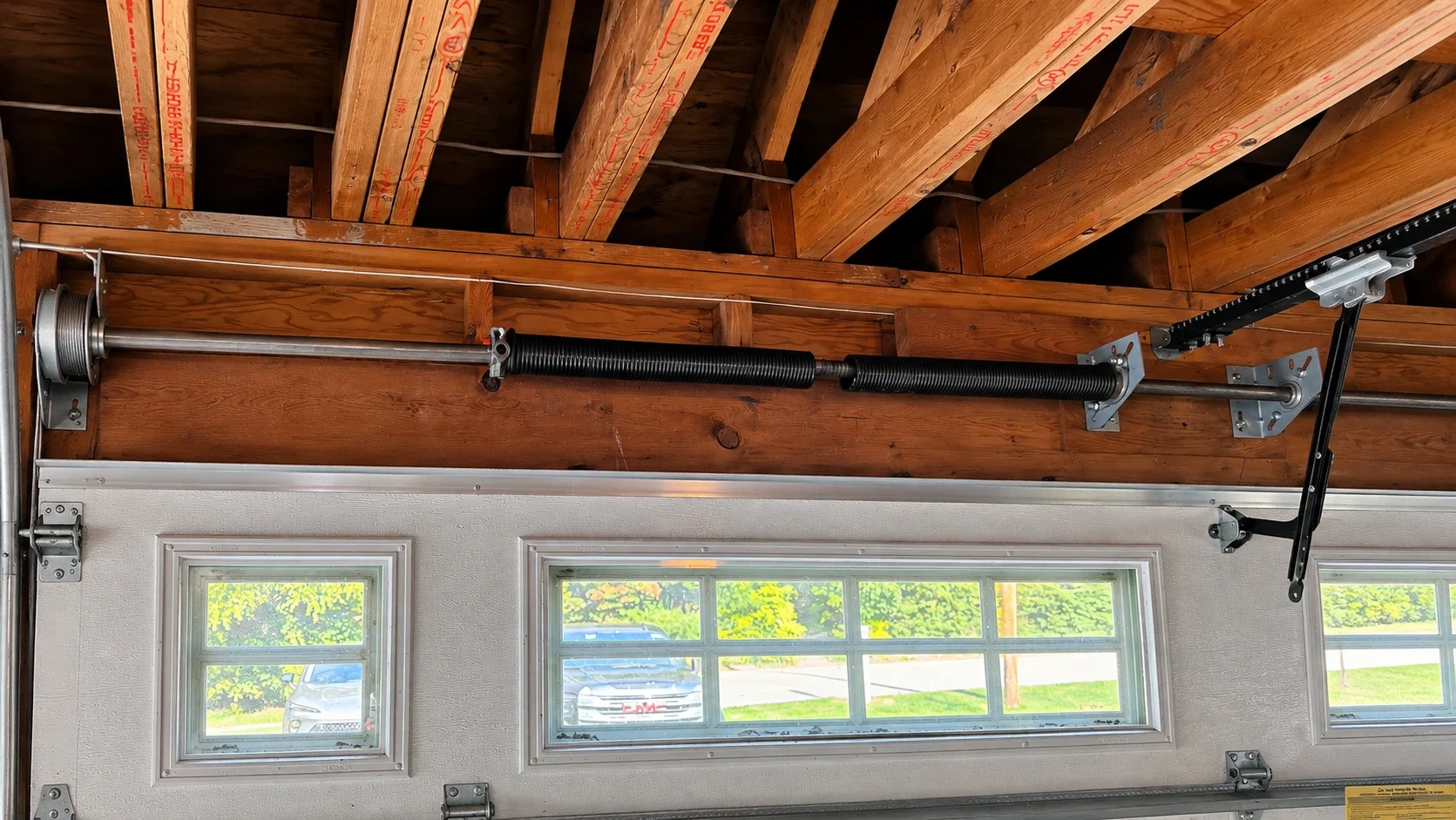
A garage door torsion spring system is the counterbalance assembly mounted above the door. It stores and releases force so the door lifts evenly, closes under control, and puts far less strain on the opener. When it wears out or goes out of adjustment, the whole door can feel heavy, jerky, loud, or unsafe.
For most homeowners, the real question is not what the spring does. It is whether the whole assembly still works as one system, or whether one worn part is starting to pull the rest out of line. If you are sorting out that decision, a few practical checks can save time and prevent a bad repair choice.
What a torsion spring system actually does
The spring assembly above the header is there to balance the door, not just help it move. Most makers design torsion springs to counterbalance most of a residential garage door’s weight so the opener only guides movement, not lifts the full load.
A failing spring changes more than lift speed. The door may start closing harder, hesitate on the way up, or stop partway because the opener is being asked to do work the spring used to handle.
A balanced door also protects other parts. When the spring force is close to correct, the cables stay even on the drums, the rollers track better, and the motor is less likely to strain.
If the door suddenly feels much heavier by hand, treat that as a system warning. A spring issue can turn into a cable, roller, or opener issue fast, which is why homeowners often end up needing broader garage door repair ca rather than just one loose adjustment.
Key parts above the door and how they work together
The main parts are the torsion spring or springs, the torsion tube, the cable drums at each end, the lift cables, and the center and end bearing plates. Together, those parts transfer spring force into smooth lifting at both corners of the door.
Most steel residential doors use one or two torsion springs sized by door weight and height. Heavier or wider doors may require a two-spring setup or high-cycle options.
The torsion tube is the steel shaft that carries the twist from the spring. The drums are the round ends where the cables wrap as the door moves up and down.
The bearings support the tube so it can turn with less friction. If a bearing binds, the spring may still be fine, but the door can sound rough and travel unevenly.
Part matching matters. A new spring on worn drums or frayed cables may restore lift for a while. But the system still will not run as cleanly or as safely as it should.
Early warning signs your spring system is failing
The first warning is often a change in sound. Homeowners notice a sharper bang from the garage, a creak during travel, or a popping noise as the spring winds and unwinds.
The next sign is a change in door behavior. The door may start rising crooked, stopping short, drifting down after opening, or slamming the last few inches when closing.
Watch the cables when the door is closed. If one side looks looser than the other, or a cable starts riding unevenly on the drum, stop using the opener until the cause is checked.
Another clue is a visible gap in the spring coil. On a broken torsion spring, the metal often separates and leaves a clear space in the winding.
Pay attention to slower opening too. That can look like an opener problem, but it often starts with lost spring tension, worn rollers, or drag elsewhere in the assembly.
Safety first: what not to touch and what you can check
Do not loosen set screws, remove brackets, or try to unwind a loaded spring. Those parts are under stored force, and mistakes happen very fast.
Most makers base professional winding on calibrated turns set by door size and drum diameter. Incorrect turns can cause the door to free-fall or bind.
There are still safe checks you can do from the floor. With the door closed, look for a broken coil, frayed cable strands, bent track, loose hinge screws, and rollers that wobble in their stems.
You can also listen during one open and close cycle. Grinding points to friction, snapping points to a damaged spring or cable issue, and a straining motor points to imbalance.
Do not pull the red emergency release if the door is stuck partly open and you suspect a spring failure. Without the counterbalance working, the full weight can drop much faster than people expect.
Why two quotes for the same job differ
Two quotes can differ because they may not cover the same scope. One may price only the broken spring, while another includes matching springs, cables, drums, bearings, or a balance correction.
The biggest cost drivers are usually these:
| What changes the job | Why it affects the quote |
|---|---|
| Door size and weight | Heavier doors need different spring sizing and sometimes added parts |
| One spring or two | A paired setup can mean more parts but better balance and service life |
| Part condition around the spring | Worn cables, drums, or bearings add labor and materials |
| Access and door condition | Tight headroom, damaged panels, or a jammed door slow the work |
Ask each company to state the spring type, whether both springs are being matched, and what worn parts were actually found. If that is not written down, the lower number can become the less complete repair.
A useful rule of thumb is simple. If one quote includes balancing the full system and the other does not, they are not equal jobs.
How long a repair takes and what the visit includes
Most spring repairs are usually handled in one visit when the right parts are on hand. The time changes with door weight, part condition, access above the header, and whether other damaged parts have to be corrected first.
WeDo GarageDoor provides same-day garage door repair services across the South Bay and Santa Cruz County. That matters when a car is trapped inside, the door will not secure, or a broken spring has left the opening unsafe to use.
A proper visit should include more than swapping a spring. The technician should identify the spring size, inspect cables and drums, check bearings and rollers, set tension, balance the door by hand, and test opener travel.
If the opener settings are left untouched after the balance changes, the door may still reverse badly or hit the floor too hard. A complete repair includes system testing, not just the visible broken part.
If the door is stuck open or the spring breaks at night, the priority shifts from convenience to security. In that case, an emergency garage door repair service makes more sense than waiting and risking a drop or an unsecured garage.
Local notes: permits, HOAs and access in Santa Clara
A spring repair by itself usually does not raise the same permit questions as structural framing or a new electrical circuit. If the work expands into a new opener outlet, new wiring, or changes tied to the building, confirm with Santa Clara’s building department before the job starts.
If your home is in San Jose or Cupertino, the same idea applies through your town's building department. The permit office that matters is the one for the town your home is in.
HOAs can matter when anything visible from outside is changing. A spring replacement usually is not visible, but a new door style, exterior hardware, or opener accessories mounted where they show may need HOA review.
Access also affects the day of repair more than many owners expect. Low storage racks, ceiling shelving, parked cars tight to the opening, or locked side gates can add delay before the spring assembly is even reachable.
If the home is vacant, a property manager should also confirm power is on and remotes are available. That avoids wasting time on a visit when the door can be balanced but not fully tested under normal operation.
Care after repair: simple habits that extend life
The best post-repair habit is watching for changes instead of waiting for failure. A door that gets louder, starts shaking, or loses smooth travel is asking for a small correction before it becomes a larger repair.
Keep the tracks free of debris, but do not grease the track faces. Rollers need to roll, not slide, and heavy grease on the track can collect grit and make movement dirtier.
Use a garage-door-safe lubricant on moving metal contact points if the maker allows it. Light lubrication on springs, hinges, and bearing points is usually better than spraying everything heavily.
Test the photo eyes monthly by blocking the beam during closing. Test the auto-reverse with a solid object on the floor, using the opener maker’s instructions, because safety settings can drift after repairs or power interruptions.
Pay attention to humidity near the coast in places like Santa Cruz or Capitola. Salt air and damp conditions can shorten the life of exposed steel parts, so surface rust deserves attention early.
Some owners also like to compare finished setups before replacing an older door.
Start with a safe inspection, not a fix
If the door is heavy, crooked, loud, or stuck, the right call is to inspect the whole assembly before anyone touches high-tension parts. The decision is rarely about one spring alone. It is about whether the system is still balanced, secure, and safe to use.
If you want help sorting that out, contact We Do Garage Doors with a few clear photos, the rough door size, and what worries you most. You can also contact We Do Garage Doors or call We Do Garage Doors at (408) 290-5673 if you want same-day help with a torsion spring issue.
Frequently asked questions
Should both springs be replaced if only one breaks?
Yes, if the door uses a matched pair, replacing both is often the safer choice. The unbroken spring has usually seen the same use and may fail soon after the first.
Can an opener burn out because of a weak spring?
Yes, a weak spring can overwork the opener and shorten motor or gear life. The opener is meant to control travel, not haul a heavy unbalanced door on its own.
What should I photograph before asking for help?
Take one photo of the full closed door, one of the spring assembly above it, and one of each side where the cables run. A short video of the noise helps if the door still moves safely.
Is rust on a torsion spring always a reason to replace it?
No, light surface rust alone does not always mean immediate replacement. Deep pitting, flaking metal, or rust paired with noise and poor balance is a different story.
What happens if a cable comes off the drum but does not snap?
The door can jam crooked or drop on one side if it keeps moving. Do not keep cycling the opener, because that can bend hardware and make the reset much harder.