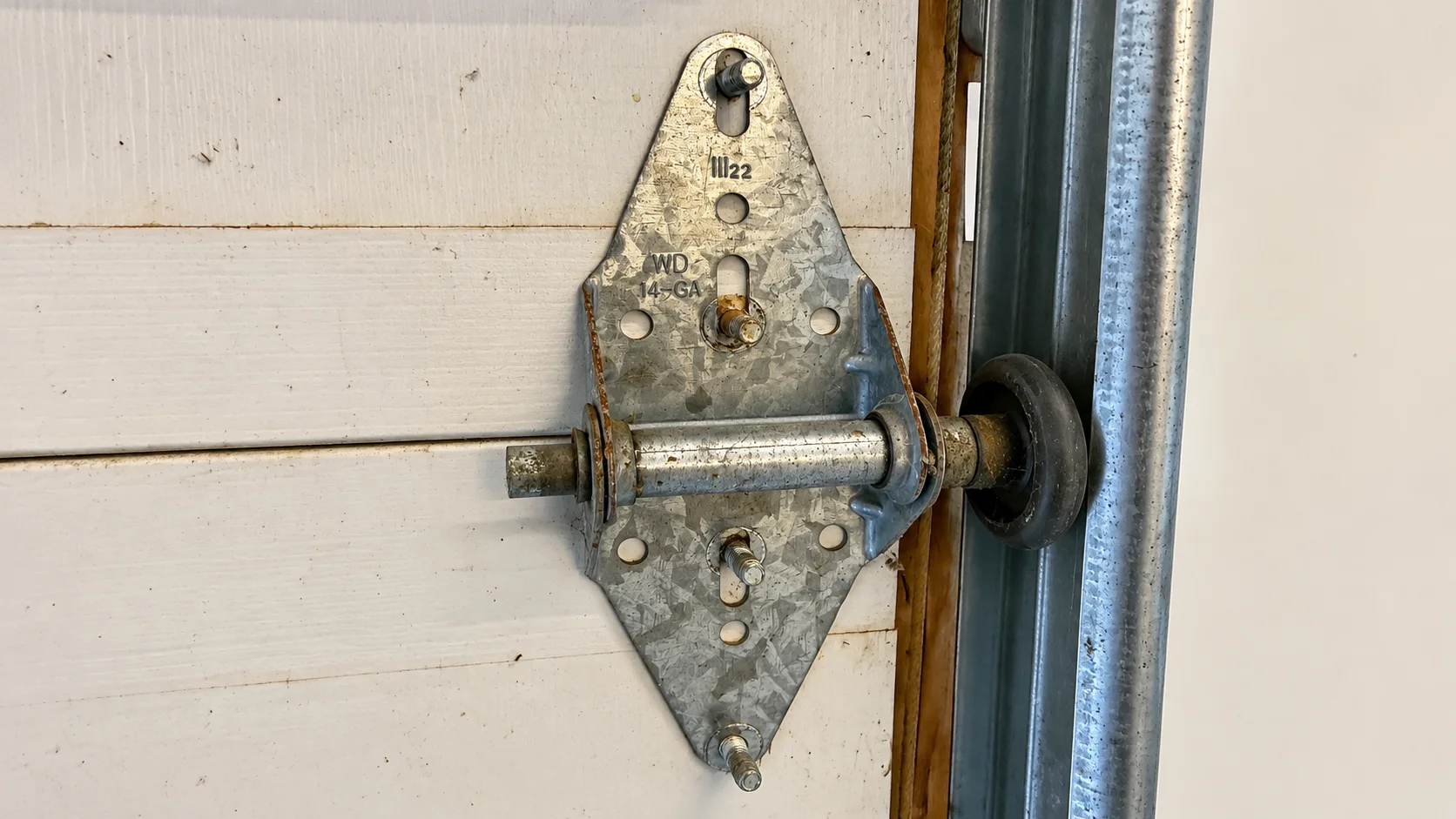
Garage door roller repair fixes a door that rattles, jerks, binds, or comes off track because the small wheels at each side are worn or damaged. The benefit is simple: if the door itself and track are still sound, repairing the rollers restores smoother travel, lowers strain on the opener, and helps stop bigger parts from wearing out next.
Most people notice the problem when the door gets loud, hesitates halfway, or shakes the whole garage. The hard part is deciding whether the rollers alone need attention or the door has started damaging tracks, hinges, or cables. If you are weighing that call, the points below are the ones that matter.
What roller repair actually fixes
Roller repair deals with the moving wheels that ride inside the metal tracks on both sides of the door. When those wheels wear down, crack, loosen, or seize, the door stops rolling cleanly and starts dragging, wobbling, or popping as it moves.
The work may include replacing worn rollers, tightening loose hinge fasteners, checking track alignment, and making sure each wheel sits square in the track. A roller problem often shows up first as noise, but the bigger issue is uneven travel that puts extra load on hinges and the opener rail.
A door with one bad roller can also mask other trouble. If a track is bent, a hinge is twisted, or the door section is out of line, new rollers alone will not solve it for long.
If the door is stuck open or has jumped the track, that moves beyond routine garage door service. We Do Garage Doors provides same-day garage door repair services across the South Bay and Santa Cruz County, with staffed shops in Santa Clara and Capitola.
Repair or replace the rollers? The rule that decides
Repair the rollers when the trouble is wear at the wheel, stem, or bearing, and the rest of the path is still straight. Replace them as a set when several are worn, the door has mixed roller types, or one failed roller has started chewing up the others.
Here is the practical rule:
| Choose repair or replacement | What points that way |
|---|---|
| Repair the affected rollers | One or two rollers are damaged, the track is straight, hinges are solid, and the door moves evenly by hand |
| Replace all rollers | Several rollers wobble, crack, or grind, the door is noisy throughout travel, or old and new rollers would be mixed together |
| Look beyond the rollers first | The track is bent, the door section is damaged, or the cables and hinges are pulling the door out of line |
The key is pattern, not just one noisy spot. If the wear is isolated, a targeted fix makes sense. If the wear is spread across the door, partial work often turns into repeat service because the remaining rollers fail in sequence.
Why two quotes for the same job differ
Two quotes can differ because one is pricing only the obvious bad rollers, while the other is pricing the condition that caused them to fail. On garage doors, access and root cause change the job more than the rollers themselves.
The largest cost drivers are usually:
- How many rollers need work
- Door size and weight
- Opener strain or rail misalignment
- Urgency, especially after the door comes off track
A light single door with clean access is a simpler visit than a heavy door that binds at one corner. A quote should also make clear whether it includes only roller replacement or the related adjustment that keeps the new parts from wearing out early.
If you are comparing bids, ask each company the same question: what caused the rollers to fail, and what in this quote fixes that cause. That usually explains the spread faster than any line item.
How long roller repair takes and what the visit includes
Most roller jobs are usually finished in one visit. The time changes with the door’s condition, how many rollers need attention, and whether the track or hinges need correction before new parts can run properly.
A proper visit includes more than swapping wheels. The technician should disconnect the opener, move the door by hand, inspect the roller stems and hinge holes, check for bent track, and watch whether the door pulls harder on one side.
If the rollers are replaced without those checks, the door may get quieter but still travel badly. That is how fresh parts end up wearing fast.
On a door that has started binding hard, the visit can expand into related work. If the opener has been forcing a dragging door, the motor arm or trolley may also need a look, and a severe jam can overlap with emergency service rather than routine maintenance.
Local notes for Santa Cruz homes: salt air, HOAs, and permits
In Santa Cruz, salt air changes the advice. Metal parts can corrode faster near the coast, so a noisy roller may be more than dried lubricant. It can be rust at the stem, pitting on the bearing, or track scale that keeps the wheel from turning freely.
For homes in an HOA, confirm exterior appearance rules before changing visible hardware or the door itself. Rollers are usually hidden when the door is closed, but related work can involve hinges, tracks, or trim that may show from outside.
Permits depend on the scope, not the noise. Routine roller service often does not raise permit questions, but larger changes tied to structural framing, electrical work, or full door replacement may need confirmation with your town's building department. If the home is outside town limits, the county is the office to confirm with.
If a coastal door fails open during damp weather, fast help matters because corrosion and exposure can keep compounding. That is where an emergency garage door repair service can make more sense than waiting for a standard appointment.
DIY checks you can do before you book
You can learn a lot in five minutes without taking anything apart. The goal is not to fix the door yourself. It is to tell whether the rollers are the likely problem and describe it clearly.
Start with the opener disconnected only if the release cord is safe to reach and the door is fully closed. Then check these points:
- Roll the door by hand a short distance and listen for one loud spot
- Look for a wheel that no longer sits centered in the track
- Watch for a hinge that flexes more than the others
- Check for black dust near rollers, which can mean wheel wear
- Look for flat spots, cracks, or missing wheel edges
- Stop if the door jams, tilts, or feels heavy on one side
Do not loosen brackets, bottom fixtures, or cable attachments. Those parts can be under spring tension, which stores lifting force and can cause injury if released the wrong way.
Photos help more than people expect. A close shot of the roller, hinge, and track at the bad spot often shows whether the problem is simple wear or damage spreading into the door hardware.
Post-repair care: how to keep rollers quiet and smooth
After the repair, a little routine care helps the new parts last longer and keeps the door from getting noisy again. The goal is smooth movement, not a greasy track.
Most makers call for periodic lubrication of moving metal contact points, but not a heavy coating inside the tracks. Too much product in the track attracts grit, and that can make rollers skid instead of roll.
Use this simple upkeep pattern:
- Wipe loose dust from the track faces
- Lubricate roller bearings if the roller type allows it
- Add a light garage-door lubricant to hinge pivots
- Listen during one full open and close each month
- Watch for a new wobble before it becomes a bind
If the door gets louder soon after service, do not keep running it for days to “work it in.” Fresh noise usually means something is misaligned, a fastener has loosened, or another worn part is now carrying the load. Some homeowners like to compare details with recent garage door work so they know what straight tracks and clean hardware should look like.
Schedule a local inspection before more damage spreads
If the door is just noisy, the decision is usually straightforward: deal with the rollers before the strain spreads into hinges, tracks, or the opener. If the door also jerks, tilts, or rubs hard at one spot, it needs eyes on the whole path, not just the wheel making the sound.
If you want help sorting that out, get in touch with We Do Garage Doors or call We Do Garage Doors at (408) 290-5673. Have a few photos ready, the rough door size, and a short note about what worries you most.
Frequently asked questions
Can bad rollers make my opener seem weak?
Yes. A dragging door can make a healthy opener sound strained or stop short because the motor is fighting friction, not lifting cleanly.
Is one crooked roller enough to take the door off track?
Yes, especially if it is near a hinge that already has play. One roller that rides on the track edge can start pulling the section sideways.
What should I ask for if the door is noisy but still opens?
Ask whether the noise comes from the roller wheel, the bearing, the hinge, or the track contact. Those are different fixes, and the right answer should name which one was found.
Do all garage door rollers need lubricant?
No. Some sealed rollers are not meant to be flooded with lubricant. If the bearing is sealed, extra product can collect dirt around the wheel instead of helping it.
Can I replace just the noisiest roller myself?
It is not the safest first DIY job. Rollers near certain brackets can sit close to spring-loaded parts, and the risk is not worth guessing where that tension is held.