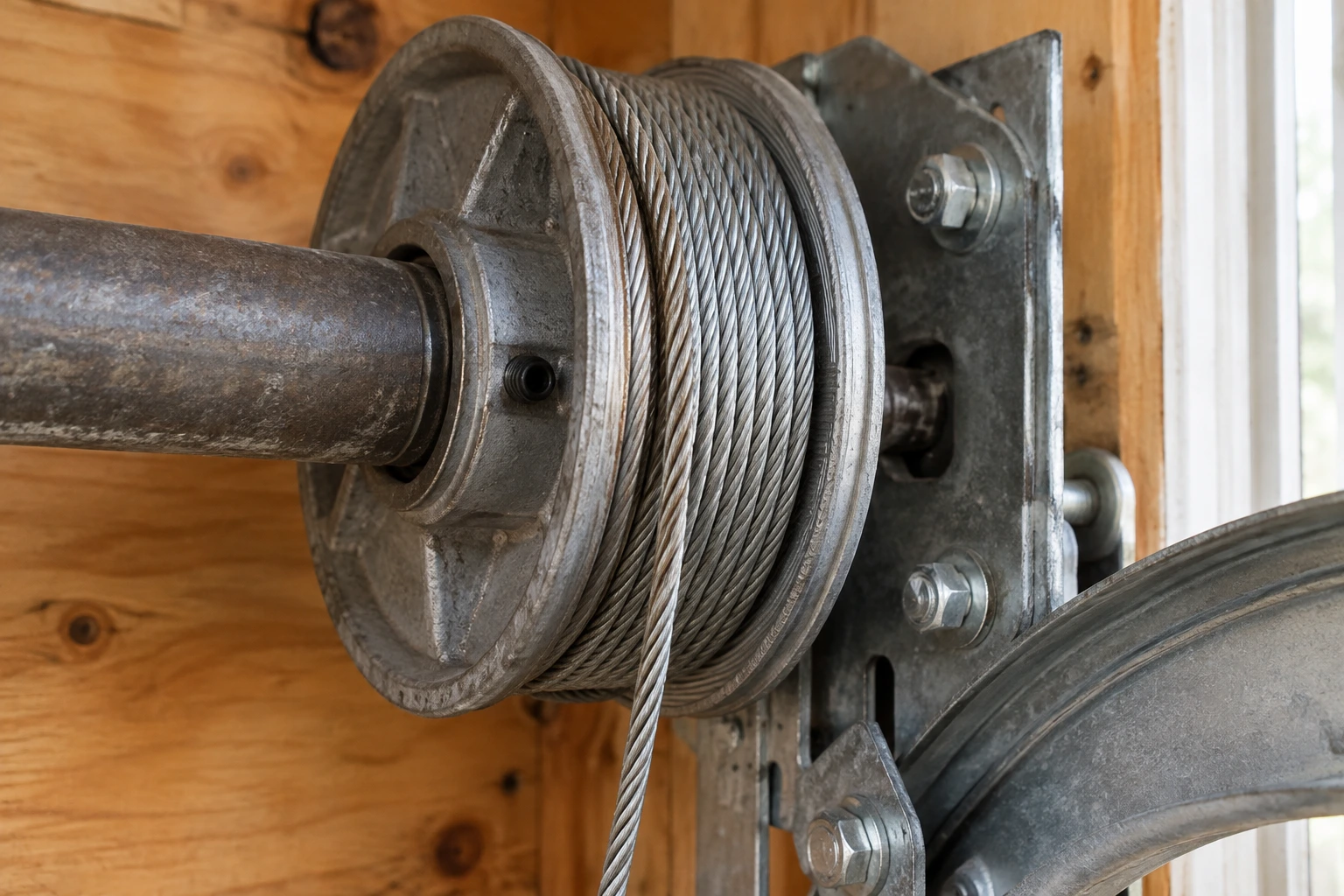
Emergency garage door repairs prioritize restoring functionality quickly, especially if the door is stuck open and your home is exposed. If that is your situation, keep people clear of the opening and arrange professional help. Do not try to run one more cycle to “see if it works this time.”
What actually counts as an emergency
The most common examples are simple to recognize: the door is stuck open and will not close, it is jammed shut with a vehicle trapped, or it is visibly crooked or off its track. Each of these conditions raises the risk of injury or property damage the moment you try to force movement.
A myth worth clearing up: “If the opener still runs, it is not an emergency.” Wrong. The safest first move in a true emergency is to stop cycling the opener, keep clear of the opening, and book an inspection.
If you are searching for Emergency Garage Door Repairs in Santa Clara CA, focus on the problem you can see and feel from a safe distance. You do not need to know whether the spring, cable, track, or opener logic is to blame. You only need to know that the opening is not secure or the door will not move safely, and that is enough to treat it as urgent.
Symptoms you should treat as urgent
You do not need tools to spot early warning signs. You only need to watch and listen to a single open-and-close attempt. If any of the following is true, treat it as an emergency rather than a “weekend project”:
- The door is stuck open or will not close and leaves the garage exposed.
- The door is jammed shut and traps a vehicle or blocks a critical entry.
- The door sits crooked, rubs a track, or looks off its rollers at any point of travel.
- You hear a sharp bang and then the door will not lift or feels unusually heavy.
- The bottom edge lands, then the door immediately reverses and will not secure the opening.
These are observable conditions, not diagnoses. The priority is to stop the cycle and secure the opening quickly.
Why speed matters more than a perfect guess
By the time a technician arrives, a simple fix may have grown into a set of parts that never needed to be replaced.
You can observe what the door does from a safe distance and communicate those observations when you book service. That is all a technician needs to begin narrowing the issue and planning a safe recovery.
When you act quickly, you also preserve options. Some emergencies can be resolved the same day with adjustments and component-level repairs once the opening is secured.
How emergency service in Santa Clara is handled
That sequence matters. There is no point in forcing motion or swapping parts until the opening is safe and the system can be evaluated under control.
WeDo GarageDoor provides same-day residential service across the South Bay and Santa Cruz County, with staffed shops in Santa Clara and Capitola. That local footprint exists for a reason: when a door is stuck open or a family car is locked in, distance translates into delay. Our team handles emergency scenarios that commonly involve springs, openers, cables, and rollers as part of our residential repair scope, as well as full door and motor installation when the right answer is replacement rather than repair.
If your emergency is tied to controls or the motor, you can learn more about our approach to diagnostics on our page for Garage Door Opener Repair in Santa Clara. If the priority is simply to get help now, go straight to our Emergency Garage Door Repair page. Both pages explain what we service and how we evaluate the difference between an opener problem and a door hardware problem without guessing from a symptom.
Part of any competent emergency visit is confirming that the door hardware is not masking a deeper issue. That is why a thorough test cycle after repair is as important as the repair itself.
Myths that waste time or add risk
Emergency situations invite quick fixes and strong opinions. A few myths come up so often in Santa Clara homes that they are worth addressing head-on.
- “The opener is always the problem.” Doors and operators are a system. A jam, imbalance, or obstruction on the door side can cause the opener to stop or reverse to protect itself.
- “If it moves, it is safe.”
- “One more try will clear it.” If your opener has already reversed or stalled on its own, it did so for a reason. Let a technician find that reason.
- “I need to diagnose the part before I call.” You do not. Describe what you see and hear from a safe distance: where the door stopped, what the opener did, and whether the opening is secure. That information is enough to prioritize your call and prepare for the visit.
Treat these beliefs as costly detours. In an emergency, your job is to keep people clear and request help. The technician’s job is to identify the mechanism and put the system back into safe operation.
Choosing a provider under time pressure
In a true emergency, you do not have hours to research. You do have time for a few pointed questions that separate a capable residential provider from a generalist who is not set up for urgent garage work:
- Do you provide residential emergency garage door repair in Santa Clara?
- Can you handle door hardware and openers together, not just one or the other?
- If parts are required, will you first secure the opening?
- What components are in scope for on-site repair today, and what requires a return trip?
- Will you test safety features and the full travel of the system before leaving?
Local presence matters too. WeDo GarageDoor operates two staffed shops, one in Santa Clara and one in Capitola, to cover the South Bay and Santa Cruz County with same-day service. That dual-location model is built to reduce travel time and bring localized expertise to the job, which is especially valuable when you need a door secured, not just diagnosed.
If you prefer to verify real experiences before you call, read our Customer reviews from Google. Reviews give you signal on communication, craft, and whether a provider actually resolves emergencies rather than deferring them.
What you can safely do while you wait
There is a lot you should not do in an emergency garage scenario, and that boundary keeps you safe. There are a few things you can do that do not cross it.
First, stop using the opener the moment a door jams, reverses repeatedly, or sits crooked. Second, keep family members and pets away from the opening and from under the door path. A closing or unbalanced door is heavy enough to cause injury. Third, if the door is stuck open, secure what you can around the garage and move valuables out of easy reach. Finally, when you call, describe exactly what you observed: where the door stopped, whether the opener moved the door at all, any lights or beeps you noticed, and visible conditions like rubbing or a gap. Clear observations help a technician arrive prepared.
If conditions change while you wait, do not experiment.
Preventing the next emergency
Most emergencies start as small complaints: a new noise at the same point of travel, light rubbing near the top, a door that bounces on landing, or an opener that hesitates before moving. Routine observation is your best prevention tool. Watch a full cycle periodically. A healthy door moves smoothly and seals cleanly at the bottom. When something changes, it is cheaper and safer to schedule service before the problem escalates.
Prevention also means understanding the split between the door and the opener. If the door itself struggles to move, no amount of button pressing will fix it.
A final word on priorities: an emergency visit is not about squeezing the last cycle out of a failing system. It is about securing the opening and returning your door to safe operation. When that is the standard, you make better choices, avoid common myths, and keep your household protected.