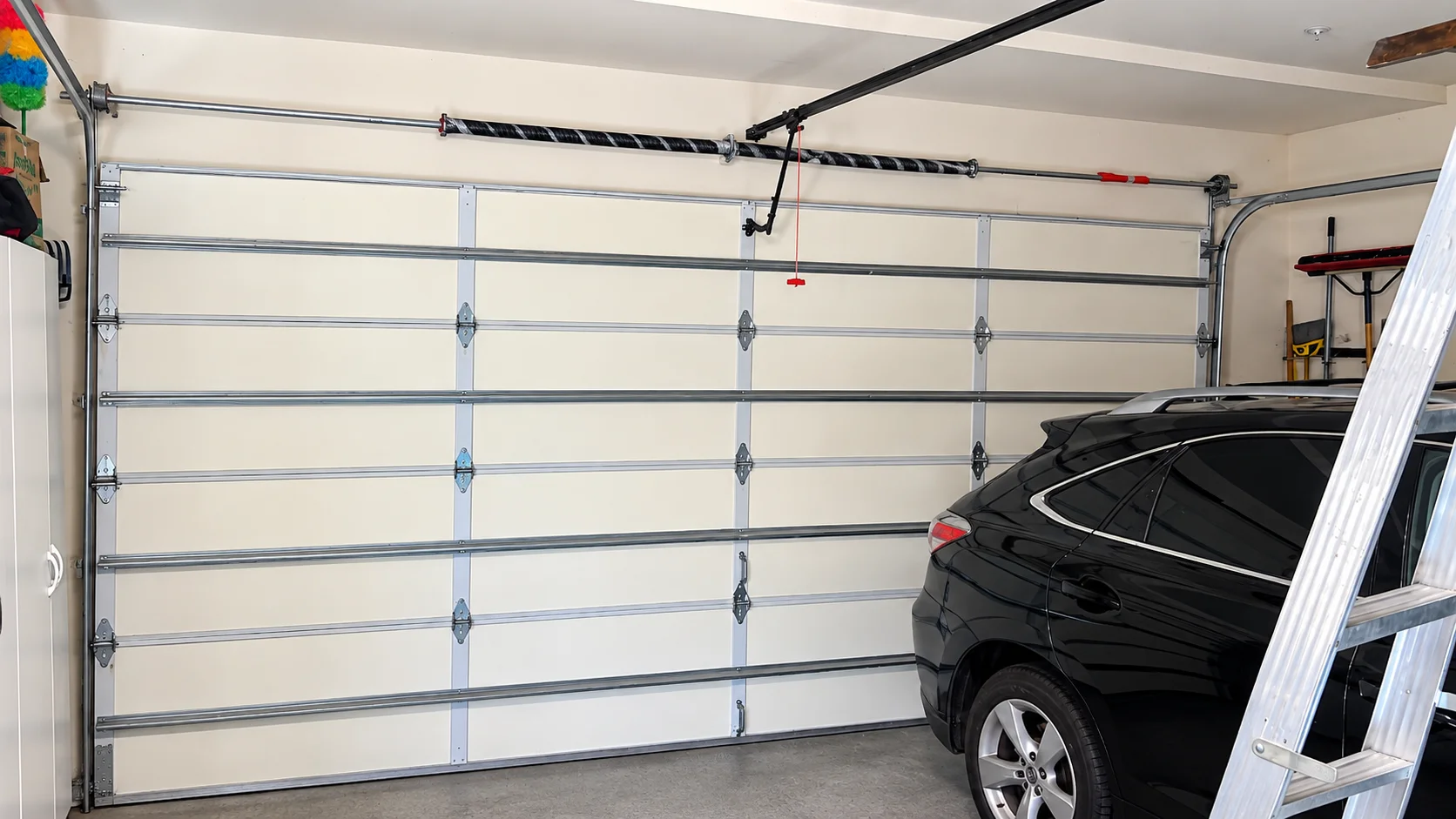
If your garage door is noisy, prioritize contacting a professional before attempting repairs to ensure safety. A garage door is a heavy, spring-assisted system, and guessing at a fix can turn a minor vibration into a larger repair or a hazard.
The sound matters, but so does where in the door’s travel it happens, whether it is repeatable every cycle, and if it changes with the weather or time of day. Read this as a guide to what you can safely observe and when to stop using the door and schedule service. If you need local help, see our page for Garage Door Repair in Santa Cruz, CA when you are ready to get a same-day appointment.
The sounds that matter and the patterns behind them
Noise alone is a blunt signal. Two doors can squeal for completely different reasons. What helps a technician most is the pattern: when it starts, whether it is tied to a specific point in the door’s travel, and whether it is getting worse.
- Squeaking or creaking. High-pitched, often intermittent, and sometimes more noticeable after damp weather. This is typically friction somewhere in the moving hardware.
- Grinding or scraping. A harsher sound that may appear at the same height every cycle. It often indicates metal components contacting improperly or a rough bearing surface.
- Rattling or vibration. A loose, buzzing quality that can appear over bumps or at a certain speed during travel. It can come from fasteners, panels, or opener hardware transmitting vibration.
- Thump or bang. A single sharp impact noise. If followed by jerky motion or a crooked door, stop and do not operate the door again until it is inspected.
- Clicking. Repetitive ticks from opener relays or accessories. Clicks can be normal in short bursts at start-up but persistent clicking deserves attention.
- Humming without movement. This is not a noise to troubleshoot by trial and error. Leave the door as-is and get a professional evaluation.
A useful rule of thumb is repeatability. If the same sound shows up at the same place in the door’s travel, it is a sign of a consistent interaction between parts that a technician can isolate. If it comes and goes with damp air or temperature changes, environmental factors may be amplifying light wear.
Several broad factors tend to create or amplify noise on residential doors. None of the points below are a diagnosis. They are the kinds of conditions a professional looks for when they listen to your description and watch the door operate.
First, friction is the simplest driver of noise. Rollers turn within their housings, hinges rotate as sections break over the track radius, and the door glides inside the steel tracks. As surfaces dry out, pick up fine dust, or wear, they can start to sing. That is why a squeak can appear after a dry spell and quiet down when ambient moisture returns, or vice versa. Changes in humidity can swell wood, alter small clearances, and change how vibration travels. Even on steel doors, moisture affects dust and fine debris that work into moving joints.
Second, alignment matters. The sound is not the only clue here.
Third, worn or out-of-round rollers can chatter, especially under load as the door rounds the upper curve. Nylon and steel rollers age differently, but both can develop play that turns into vibration and noise. Again, this is descriptive, not prescriptive. A technician confirms roller condition by inspection because similar sounds can also come from loose track hardware or hinge pins.
Fourth, opener drive and mounting can transmit or create noise. Chain and belt drives must be tensioned within a window. Too tight and they whine or rumble; too loose and they slap or chatter on start and stop. The opener’s mounting, header bracket, and rail alignment also determine how much motor vibration makes it into the framing of the garage, where it turns into rattles and buzzes that sound like “the door” but are actually structure-borne.
Finally, fasteners and panels loosen over time. A classic rattle is a hinge or track bolt that has worked loose and now chatters as the door moves. Panels can also resonate, making a small vibration sound larger. The important limit here is safety. When in doubt, observe, do not touch, and describe what you see and hear.
How a technician safely isolates a noise
From a homeowner’s perspective, the best help you can provide is a clear description: where in the travel the sound appears, whether it is worse on opening or closing, and whether anything changed recently like a battery swap, a bump to the door, or a stretch of damp mornings. With that, a qualified technician will make a series of controlled checks.
They will start by watching an open-close cycle from a safe distance with people clear of the door path. The aim is to pinpoint the location of the sound along the track and the timing relative to door movement. That triangulates whether to first inspect rollers and hinges at a specific section joint, brackets near the curved track, or opener hardware.
Next comes a visual inspection. These are the small tells that a part is carrying load or contacting where it should not. If the noise seems structure-borne, they will check mounting points for the opener rail and the header bracket, then evaluate whether vibration is being amplified by a loose bracket or a stiff-to-flexible transition in the framing.
They will also separate “door noise” from “opener noise.” A buzzing or clicking from the operator head can signal an electrical or logic issue, while a grind from a consistent point in the track suggests a mechanical contact.
If you want a deeper homeowner-oriented overview before your visit, our Noisy Garage Door: Common Causes and Repair Signs guide outlines what is safe to look for and what should wait for a professional.
When to stop using the door and call for help
Some noises are just that: noise. Others are an early warning.
Do not run the door again.
These are load-path components. Leave them as-is and keep people clear of the door until a technician inspects.
Practical ways to keep a door quieter without crossing into risky work
There is a short list of habits that reduce nuisance noise while keeping you on the safe side of this system.
Keep the tracks clear of debris. Dust, cobwebs, and light grit act like an abrasive in moving joints and track channels. A soft brush and a vacuum to clear the track surfaces go a long way toward preventing minor squeaks from building into harsher sounds.
Listen for change and note the pattern. A consistent squeak at the first break-over or a rattle during the last foot of travel is valuable information. Note what changed around the time the noise started, including weather, recent projects in the garage, or a bump to the door. That context helps a technician go straight to the likely interactions and shortens the visit.
Do not “spray and pray.” A common misconception is that any squeak means the door just needs lubricant. If you choose to use a door-rated lubricant, reserve it for clearly accessible pivot points like hinges and roller bearings, and use a light touch.
Clean, do not bend, the safety sensors. If your door is noisy and also reversing unexpectedly, it is easy to assume the opener is failing. Sometimes the sensors are simply dirty or misaligned. Dust the lenses gently and ensure nothing is blocking the beam. If the reversal continues, leave further checks for a professional.
Schedule periodic professional maintenance. A trained eye can catch a track bracket that is just beginning to loosen, a roller beginning to wobble, or a hinge wearing into a click. Early correction quiets the door and avoids costlier repairs down the road.
Two more misconceptions are worth clearing up. A fair bit of garage door sound comes from the door hardware, and a perfectly healthy operator can transmit vibration from loose or worn parts down the line. Second, “it is normal for an old door to be loud” is too broad. Age alone does not require a noisy door.
Local help in Santa Cruz when your door starts talking
If you live in Santa Cruz, Capitola, Scotts Valley, or Aptos and the door has started sending you signals, you do not have to live with it or risk misdiagnosis. WeDo GarageDoor provides same-day residential service across Santa Cruz County, including comprehensive diagnostics and repairs for springs, openers, cables, rollers, and related hardware. When a problem cannot wait, book through our Emergency Garage Door Repair service to restore safe operation quickly. If you are deciding whether to schedule a visit now or monitor a mild symptom, our Noisy Garage Door: Common Causes and Repair Signs page can help you frame the conversation and know what to watch for.
For homeowners comparing garage doors in Santa Cruz or simply seeking quieter, more reliable operation from the one you have, start with safe observation, avoid guesswork on spring or cable systems, and let a trained technician translate the sound into the right scope of work. When you need us, visit Garage Door Repair in Santa Cruz, CA to arrange local, same-day help.
Helpful links for next steps:
- Read our Noisy Garage Door: Common Causes and Repair Signs guide at Noisy Garage Door
- Book local service via Garage Door Repair in Santa Cruz, CA at Santa Cruz